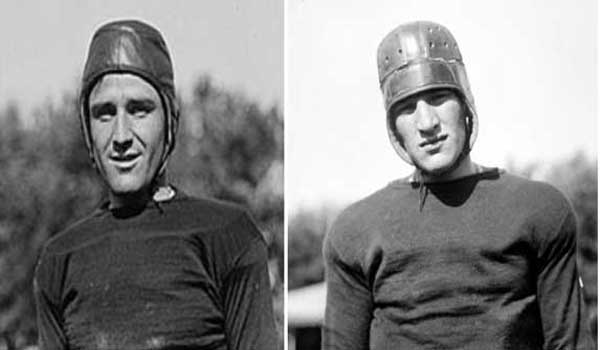
1910-1929
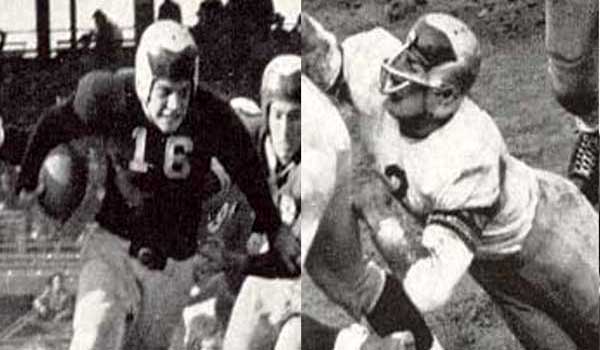
The early leather helmets adopted a soft, flat-top design seen in this photos. There were no distinguishing features among helmets between teams of different schools.
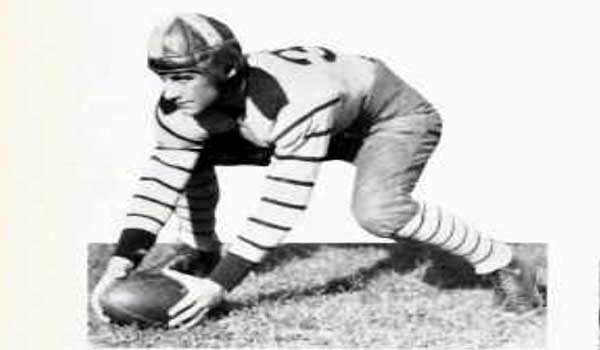
1930-1933
During the early 1930's teams began to paint along the seams of leather helmets to distinguish the teams--a help to spectators and to players, as the often muddy conditions tended to obscure the jerseys beyond recognition.
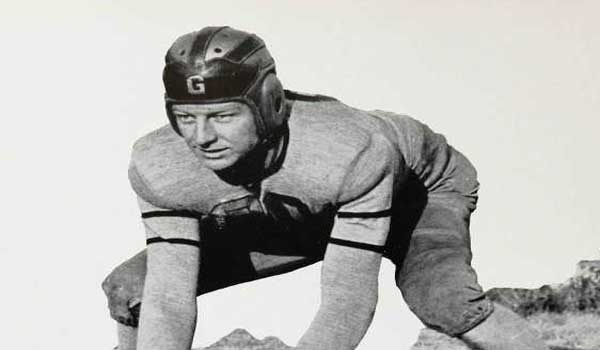
1934-1937
In the 1930s Spalding redesigned the helmet to allow for more padding. This design is the origin for the famous "winged helmet" popularized by Princeton, and later, Michigan, but used by a number of schools including georgetown. When Georgetown first adopted the style, it added a "G" logo at the front of the helmet. Dartmouth is the only Division I school still using a front-of-helmet logo like this.
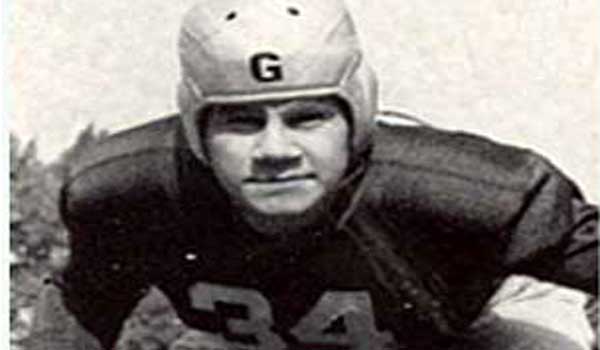
1938
Helmets were expanded in the late 1930's to add even more padding, and began to be offered by manufacturers in different colors. In this 1938 photo, kicker Augie Lio wears an all-silver helmet with the front-facing "G" logo.
1939-1942
From 1939 through 1942, the gray helmet was modified to use a new winged design.
Also from this era, a rare photo of a Georgetown player in what appears to be a face mask, a feature which was not generally introduced into football until later in the 1940's. In this 1941 photo, defensive halfback Lou Falcone is seen wearing one of these early devices.
1946-1947
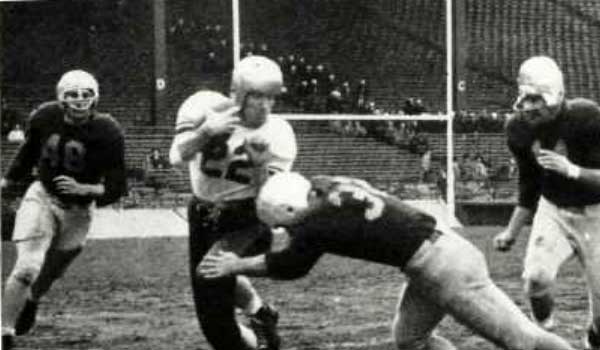
Following the end of World War II, a hard shelled helmet became the standard in college football. For two seasons, Georgetown wore an all gray helmet.
1948-1950
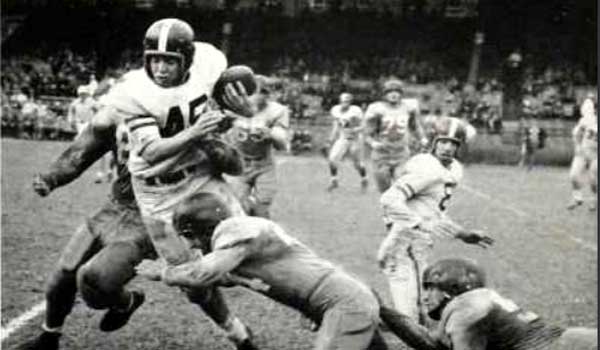
Georgetown teams of the late 1940's were outfitted in the latest style, a single-bar face mask. Georgetown wore a blue shelled helmet with white striping.
1964-1969
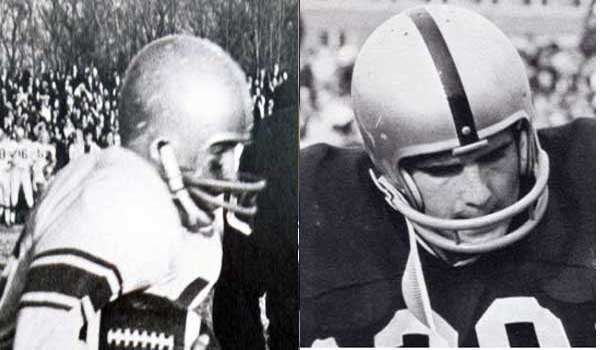
Georgetown utilized its 1940's era helmets throughout the intramural era (1951-63) but new helmets were due for the start of club football. The photo above features an all-gray helmet used in the 1964 and 1965 seasons. The only apparent helmet change in the club football era was the addition of a blue stripe across the top of the helmet after 1966.
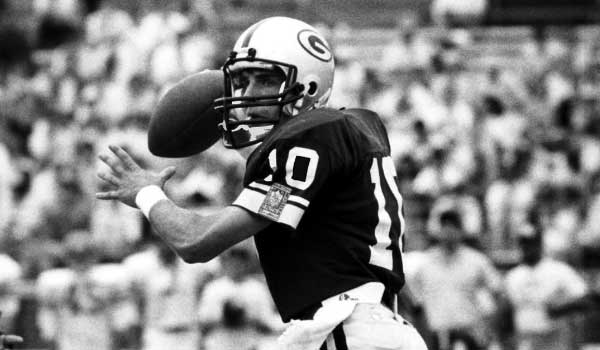
1970-1993
Georgetown teams in the Scotty Glacken era utilized a familiar logo style used by the NFL's Green Bay Packers, the University of Georgia Bulldogs, and Grambling State University, among others. Georgetown's version of this helmet featured a blue "G" and a blue/white/blue striping across a gray helmet shell.
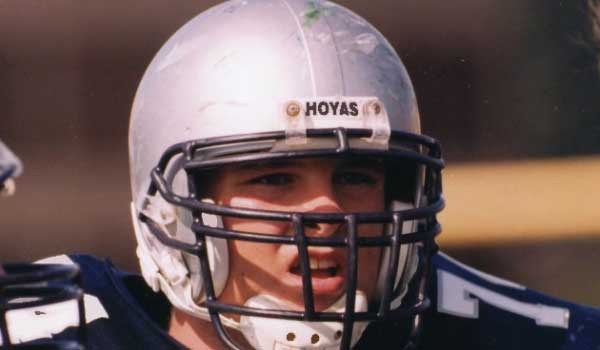
1994-2001
Georgetown's teams in the MAAC era returned to an all-gray helmet style.
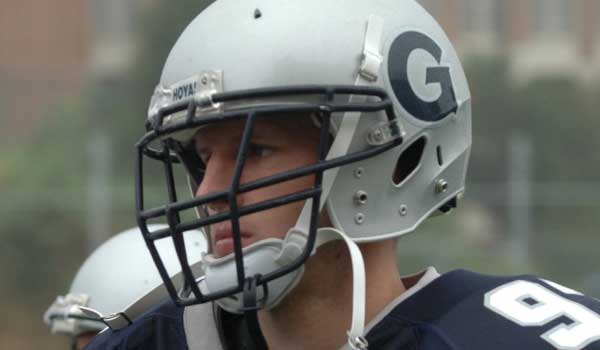
2002-2014
In 2002, Georgetown added its contemporary "G" logo to the helmet shell, although the size of the decals varied slightly over the years.
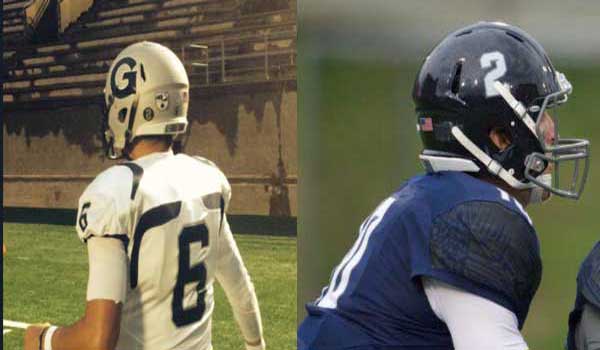
2015
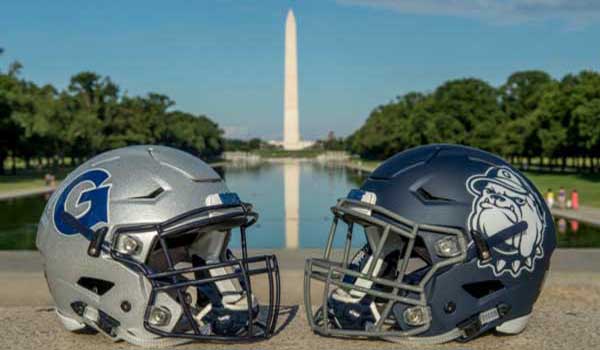
The alternate helmet craze of recent college football made its way to the Hilltop in 2015, with Georgetown debuting an all-blue alternate with the jersey number of each player. However, following the career-ending injury to LB Ty Williams in the season opener, the team voted to wear Williams' #2 on each helmet through the remainder of the season.
2016-2017
Georgetown switched to matte helmets in 2016, which utilized the Riddell product style. The right side of the blue helmet featured the player's number instead of the logo.
2018
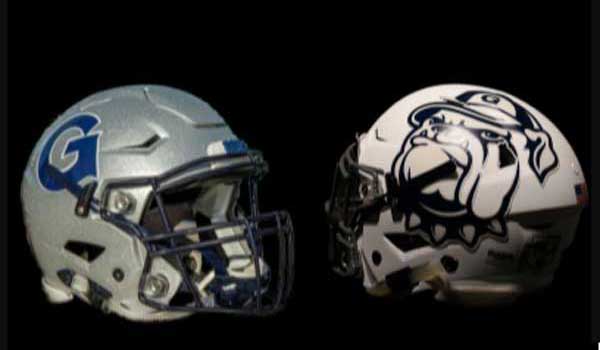
A white helmet replaced the blue as the alternate helmet, with numbers on the right side of the shell.
2019
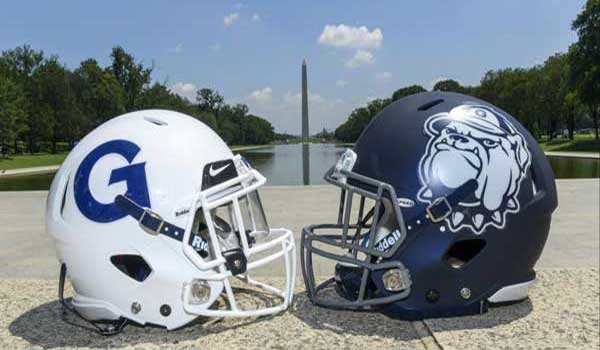
A white helmet replaced the gray shell in widespread use since the 1960's. The blue alternate helmet saw action in five games.
2021
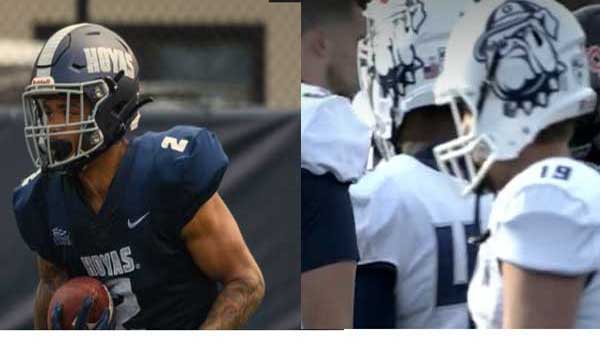
A new blue helmet joined a white helmet seen in 2018, with jersey numbers on the right side.
2022
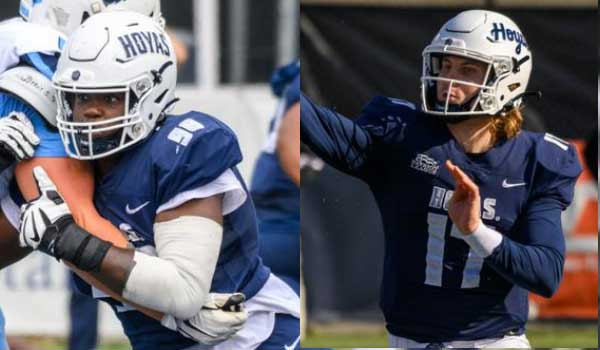
A white version of the blue 2021 helmet was seen in 10 games this season, with a player number on the right of the shell. A script "Hoyas" appeared in the season finale.
2023
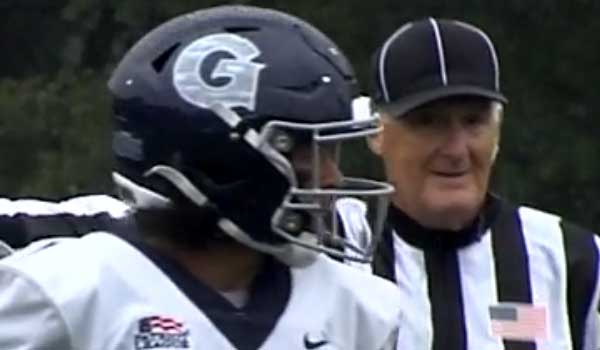
A blue version of the white 2019 helmet was seen this season.